
Let’s Have a Heart to Heart
Introducing Specialty Veterinary Cardiology Services at Our Primary Care Clinic
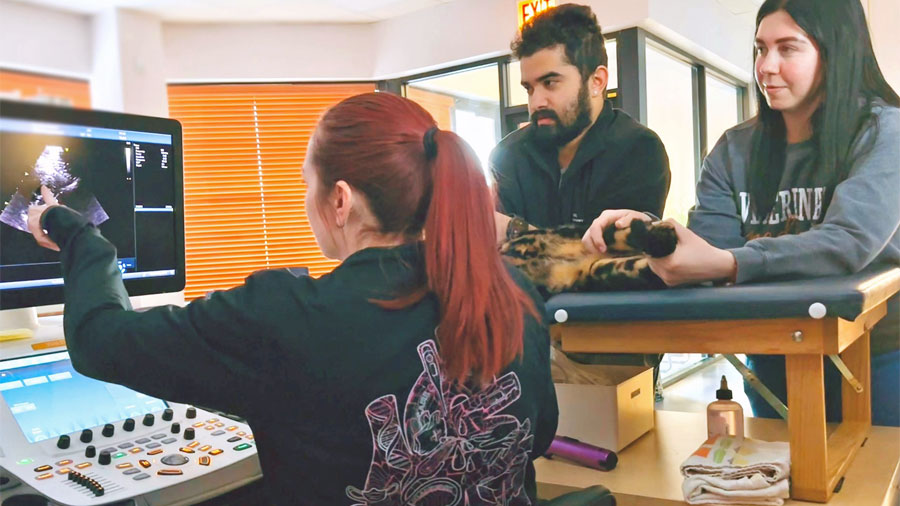
This month, love is in the air, and we’re celebrating the hearts that matter most—the ones inside your beloved pets. We’re excited to announce that our clinic now offers veterinary cardiology specialty services, including echocardiography (heart ultrasound), provided by a board-certified veterinary cardiologist, right here in the clinic you already know and trust.
What Is a Veterinary Cardiologist?
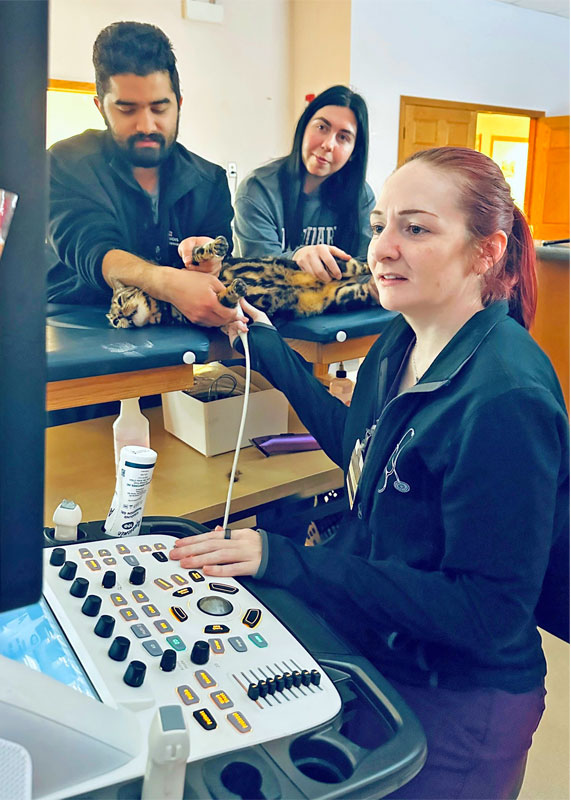
A veterinary cardiologist is a veterinarian with advanced specialty training focused entirely on heart disease. They partner closely with us as your primary care veterinarians to diagnose, monitor, and manage heart conditions—whether your pet is in the early stages of life or enjoying their golden years.
By bringing cardiology services into our primary care setting, we get the best of both worlds: specialist-level expertise paired with the personalized primary care your pet already receives.
An Echocardiogram: A Big Window into Your Pet’s Heart
An echocardiogram is a noninvasive ultrasound that lets us see the heart in motion—how the chambers fill, how the valves open and close, and how effectively the heart pumps blood.
It’s painless, typically does not require sedation, and provides a lot of information that cannot be obtained from X-rays or physical exams alone. It is one of the best ways for diagnosing most forms of heart disease and determining and evaluating what cardiac medications your pet needs. It also gives us clues on anesthetic safety and whether certain sedatives can be used for procedures.
Echocardiography can help diagnose and monitor many cardiac conditions, including:
- Heart murmurs – A heart murmur is an extra whooshing sound heard when the heart is auscultated. An echocardiogram can sort out innocent murmurs (a harmless sound) from true heart disease
- Degenerative (valvular) heart disease – Common in older, small- and medium-breed dogs
- Dilated cardiomyopathy (DCM) – Often seen in large-breed dogs
- Hypertrophic cardiomyopathy (HCM) – The most common heart disease in cats
- Congenital heart defects – Such as PDA or valve abnormalities
- Arrhythmias (abnormal heart rhythms) – When evaluated alongside ECG findings
- Pericardial disease – Fluid around the heart
- Pulmonary hypertension – Increased pressure in the lungs affecting heart function
Why We Love Offering Cardiology Care
From a primary care veterinarian’s perspective, having a specialist work directly within our clinic is truly special and not something we get the advantage of having every day.
A strong heart team: As your primary care veterinarian, we know your pet. Working hand-in-hand with an on-site cardiologist deepens our knowledge of your pet’s health, helps take guesswork out of complex cardiac cases, and allows for stronger decision making recommendations when it comes to things like anesthesia, surgery, and fluid therapy. That teamwork leads to unified treatment plans, better outcomes and fewer complications.
Less stress, more comfort: Vet visits can be stressful for pets and their owners alike. Receiving specialty care in a familiar environment helps pets (and you) feel more at ease.
Faster answers, better continuity: Because cardiology services are available right here, we can remove the specialty bottleneck and move from concern to diagnosis to treatment without unnecessary delays. And with more data on your pet, we can more specifically target treatment plans to your pet’s needs, sooner, and with more confidence.
Expert care with a personal touch: Our cardiologist collaborates closely with our primary care veterinarians to create treatment plans that are effective, realistic, and aligned with your goals for your pet’s health. The streamlined process means you get personalized answers, faster. We love having cardiology right at our fingertips!
When a Cardio Consult Could Help
Your veterinarian may recommend a cardiology evaluation if your pet has:
- A newly detected heart murmur
- Coughing, exercise intolerance, or breathing changes
- Weakness or fainting episodes
- Known heart disease needing monitoring
- Breed-related risk for heart conditions
- Abnormal findings on X-rays or lab work
- A known heart condition and needs an evaluation before an upcoming anesthetic or surgical procedure
You love your pet, and we do too! And now, advanced heart care doesn’t have to mean leaving the clinic you trust. With specialized veterinary cardiology services and primary care all under one roof, your pet can receive expert cardiac care in a place that already feels like home. Don’t hesitate to ask us if a cardiology consult is right for your pet!
— Amanda Hampton, DVM (she/her/hers)